"The story of a life is less than the actual life, because the story told is selective, partial, contextually constructed and because the life is not yet over. But the story of a life is also more than the life, the contours and meanings allegorically extend to others, others seeing themselves, knowing themselves through another's life story, re-visioning their own, arriving where they started and knowing "the place for the first time"."
-Laurel Richardson, 'Fields of Play, Constructing an Academic Life'
I write even though I have four piles of SACs glowering at me, even though I haven't had five seconds to myself all weekend, even though the thought of the coming week exhausts me and brings me to tears.
I write because I have four piles of SACs glowering at me, because I haven't had five seconds to myself all weekend, because the thought of the coming week exhausts me and brings me to tears.
In the hurly burly: a moment of clarity. At a year 11 English team meeting, a colleague comments, "this new unit was a nice break, I felt, from the norm". Others nod. Later, I wonder why. Why did she (and others) feel this way about a new writing unit which is drastically different from the way that 'writing' was 'taught' last year (and has been for many years)? Why did this seem like a 'break' from the 'challenges' of the rest of our course, even though the level of thinking required and layers of complexity inherent in this new unit are significantly greater (in my mind now, and when I was developing this unit) than anything else that we do in Year 11 English? Perhaps it has something to do with the fact that the feedback from students has been so positive: their engagement has rendered the teachers' engagement. At least, that is what I hope.
I write because I need to, and I need to remember that I need to, no matter how chaotic 'life' is: "writing-stories" (Richardson, 1997) enrich my writing, enrich my life... and hopefully the lives of others.
How does the way we record and recollect an event shape not only others’ experience of it, but our own? How does narrative capture experience? Does it matter if what is captured in words differs from the reality of the experience? How can subjectivity be a productive source for research?
Imagine this: a darkened lecture theatre, filled with year 10 English students, a flickering projection screen and a teacher: me. Z stands at the front, her short film fills the room. A house creaks. A mother dies inside as her daughter leaves home. A forlorn music box tinkles. The walls of the house peel away, piece by piece. The mother is left alone in a vacant field. Her home disappears, like her daughter. Inside: my heart rushes. Blood flows. Beauty. Emotion. Connection. Wonder.
How do you share emotional experiences like these in ways that are meaningful and productive?
I want to write a piece about research and narrative, focusing particularly on my teaching and learning experiences that have involved/been shaped by unconventional/multimodal narratives. The questions that I find myself asking about narrative and meaning have both led to, and stem from, my and my students’ explorations into narrative during the past eighteen months or so in particular. I want to write about, and share, my students’ Blake hypertexts, their multimodal poems, their creative re-visions. But this is not the end: this is a means. I know that narrative, and writing in particular, will continue to shape the way I think about and make sense of my teaching experiences. So, I want to keep getting better at it. But more than this: I want to make a contribution to my profession through this. This is what I want to write about. What constitutes practitioner research that is self-reflexive, self-critical, self-devised? How can it be framed, assessed, shaped, directed? What is its value, its worth? For the practitioner and/or for wider audiences?
I’ve written about these issues before in other ways and places but I think I need to revisit them. I’m not there yet. I am keen to do this by exploring and applying the writing of Laurel Richardson, who I have admired and wanted to draw on for some time. I went to lecture of hers some time back and it was fantastic, and I’m eagerly awaiting a couple of her texts from Amazon: ‘Writing Strategies’ and ‘Fields of Play’.
In her lecture, she described writing as not a ‘mopping up’ activity at the end of the research process, but a research activity in itself. Which isn’t really anything new of course, but the way that she explored the place of narrative in research was particularly appealing to me. Now, I’m looking back over my jottings that I recorded while I was listening:
Simplistic fiction/non-fiction divide no longer exists: there is only narrative.
New ways of knowing are opening up the ‘academy’ to others (good!)
Five postmodern writing strategies: Contextualisation, personal narration (‘self’ is active, thinking, linked to the research process), reflexivity, alternative writing formats (poetry, finger-painting!), collaboration (yep)…
Demystify authority planes (this includes YOU)
Writing against the current put me against the wall. I should have been writing in my current. Making my own way, rather than simply writing against what is already there.
Group of people writing on the pages of a text. Burning, painting, annotating, etc. Becoming not just a reader of the book, but a creator of it.
Artistic, aesthetic ways of thinking and knowing.
I will never reach a destination.
Genre: found poetry
Whenever you are attempting to do something different, it has to be aesthetically worthy, as well as research worthy.
The personal narrative has to connect with a larger sociocultural frame.
Creative synthesis
The crystal metaphor: a growing, physical form. Multiple facets. What you see is how you look. Different ways of knowing, the same material.
Once you can speak another ‘language’, it doesn’t stop you from knowing the first one. It only makes it richer.
Anyway, hopefully I’ll be able to start growing crystals out of these fragments soon. I’d be keen to hear from anyone who can offer any other suggested readings about narrative and research, particularly unconventional narrative, before I move much further along the meaning making process.
I showed this to my Year 11 students last week during a discussion about Australian identity. We decided we like this version better. See what you think.
Poor blog. How I've neglected you. A whole term has passed by and not one single post to show for it (lucky that I have other things to show for it). But, after four days break including one show (Miss Saigon), two films (Becoming Jane and Reign Over Me) and a baking session culminating in honey chocolate cake, I'm ready to blog again (that and I'm procastinating from marking my Year 12 English SACs).
This term I've....
-Enjoyed teaching A Man for all Seasons
-Helped my Year 10's create their miraculous multimodal poems
-Shed a few tears with my year 11's when we watched Grave of the Fireflies
-Nursed my baby, my year 11 course, and watched with my colleague, with a certain degree of personal satisfaction, as it came alive for the students and teachers
-Scored a new position of responsibility (ICT consultant- starting next term, and it's not nearly as corporate as it sounds, or at least I won't allow it to be)
-Experienced yet another personal tragedy unfold in my staffroom (we're all getting very good at handling these now- lots of practice)
-Submitted my Masters (still biting my fingers in anticipation of the verdict)
-Taught music for the first time (oh, my poor ears)
-Attempted to change the world, and, you know, other stuff... ;-)
I've been tagged for a meme. Now, when I get these kinds of things through email I usually delete them, because they always ask the same questions, but this is the first time that I've been 'meme-tagged' on my blog, so I'm excited. Especially since I was tagged by a fellow Victorian early career teacher, Soulcradler, who popped up on the blogosphere quite recently.
So, here are five things about me that people may not know from reading my blog:
1. I love to cook. My most recent culinary triumphs are roasted nectarine tart (crispy pastry filled to the brim with vanilla bean custard, on which nestle roasted nectarines drizzled with a sweet toffee syrup), rum and raisin ice cream (delectable) and roast pork stuffed with rocket, toasted pine nuts, prosciutto, lemon zest and fresh basil. The pork was my contribution to Christmas dinner- I was so impressed with the crackling that I took a picture:
If this teaching gig ever goes sour I'd seriously consider opening a cafe. It would be a coffee lover's haven.
2. Meet Molly.
My dog. She is the most delightful creature you're ever likely to meet. Her tail wags so hard that her bum wiggles. She loves shaking hands and going for long walks. She loves playing ball (but only if you're prepared to do most of the fetching- she's above that sort of nonsense). She enjoys sitting at the table and chatting over coffee (well, I drink the coffee and she just sits there and pats my arm occasionally, but she understands every word I say). Everyone should have a Molly.
3. I will be submitting my Masters thesis this month. Yay! I can't believe I'm finally here. I have the latest full draft sitting on my desk. The lovely, large pile of crisp white pages motivates me. Seriously, I can't believe I'm actually going to make it and that it might actually, hopefully, be pretty good....
4. I love musical theatre. Seriously, I am a musical theatre geek. In my past life, BT (before teaching), I did a lot of shows, both on stage, and in the pit (band) but I haven't done any for a while. But I'm doing one this year with my local theatre company and it feels great to be rehearsing again, and singing harmonies again, which I love. I'm teaching music for the first time this year, too. Music is my other method, which I managed pretty well to keep under wraps because I fell in love with English teaching. But, finding out that my school had me down to teach Geography of all things because they were operating under some misguided understanding that SOSE was my other method area, forced me to remind them that music was actually my other method area. I mean, I have no sense of direction. So, now I'm teaching Year 8 Music next year. More on that later.
5. My favourite childhood memory is watching my world from the roof of the house that I grew up in. When my Dad was painting the gutters or doing some work on the roof my sister and I would climb the ladder and clambour up the tiled slope to straddle the very top. We would sit up there for quite some time and look out over the entire neighbourhood. I asked my Dad about it the other day and he can't believe now that he let us do it. It was so dangerous. I don't know what the neighbours would have thought. But it was fun (almost as much fun as the time we built a flying fox between two trees in our front yard).
So, there you go. Quite an eclectic list. Hmm... who should I tag?
Scott (I know that he has something quite miraculous that he can put on his list, and it might get him blogging again) School Days (who I see has just started blogging again after a year long hiatus), and Darce
Or this one. 'Like Swallows' by Laura Henry. The description she provides of her creative vision is wonderful:
This piece is based on how the first portable typewriter played an integral part in the human aspect of WW1. I found letters that had been written by soldiers from the trenches ,still maintaing a poetry, whilst the noise and horror of war surrounded them.
Wow. Just discovered this at Aniboom. I am definitely going to use this site in my teaching next year. I can imagine bringing a wonderfully enigmatic short film like 'Beton' (above) into my year 11 literature class and sharing/discussing possible readings and interpretations.
Man. I am going to get really carried away with this labels/categories thing (check out my labels menu in the sidebar). And that's just three posts worth of 'em! But I really like the way that they can make the experience of reading a blog more 'hypertexty' (excluding a good blog-writer's use of hyperlinks, of course, which I really want to aim to be doing more of) by allowing the reader/writer to explore the posts via 'connections', rather than through the typically linear, reverse-chronological order in which the posts appear on the page.
Ok, I'm loving this new 'blogger beta' setup. For those of you who haven't switched over yet... do it! (that means you, Scott). No more mucking around with html (unless I want to!) and I can finally categorise posts- a feature that I almost switched over to edublogs for, but in the end couldn't bring myself to for fear of losing all my old posts in the process.
It was slightly annoying to make the move to beta only to discover that I had lost my counter, sitefeed and other funky encrypted thingies and whatsits, yes, but that wasn't difficult to remedy.
It was a good move. Now I just need to move house in January...
I've been thinking about the way that teachers define what it means to be a 'teacher'.
I said my goodbyes to my principal today, who is leaving the school, and he said, 'good luck with everything, nb, whatever you do, whether it's writing or teaching or academia. But I do hope you stay with teaching.'
Someone else was saying to me recently that he thought that teaching was a 'craft' and that he was glad that I was doing an MA and not an MEd for that reason. 'Teaching isn't a science or about theory,' he said, 'teachers are teachers because they either like kids or they like their subject.'
I think it's interesting when those within the teaching profession help to perpetuate, or at least believe in, incredibly narrow definitions what it is to be a 'dedicated classroom teacher'. Perhaps these definitions are remnants of a bygone era when teachers were supposed to be solitary creatures who entered a classroom, conjured mysterious learning spells in front of kiddies, and then returned to partitioned desks for more lonely lesson planning. I don't know- probably such a time never existed. I am beginning to notice however, that if you are the kind of teacher who likes to throw open your classroom windows occasionally and stick your head out to see beyond the 'immediacies' of teaching, you can make people nervous. Especially if you're a young teacher. Other teachers (esp. those in leadership positions) start shooting suspicious, sidelong glances at you, as though you're secretly plotting an escape route from the teaching profession, just because you show an interest in how your little piece of the teaching puzzle fits into the 1,000 piece jigsaw. As though they're just waiting for you to leave the classroom and go off to a university and read 'intellectual' books with those other 'academics' who simply have no idea about 'schooling'. It's the same sort of binary-thinking that underscores that tired cliche often spouted to (and sometimes spouted by) pre-service teachers: 'you don't learn anything about teaching in uni. Just wait until you get out into a school and all that stuff you heard at uni will go out the window'.
It's very strange. I don't understand it at all. But it is vital to think about and talk about what teachers mean by the label 'classroom teacher', especially when our profession is in the midst of developing standards for professional practice and putting in place processes to encourage ongoing professional renewal.
I used to 'play' with the phrase 'my professional identity' all the time, especially during my first year of teaching. It doesn't appear in my writing quite so often these days, perhaps because it doesn't seem quite as tentative and provisional to me now. I don't need to write the words so often, because my professional identity coloursevery word. In fact, after all this writing and thinking, 'my professional identity' has become precious to me. It feels like something that I need to protect, fiercely, in case other people try to define it for me, or even take it away from me. It has many facets, many shades, many sides, many layers, but somewhere close to the centre of this luminiscent, shimmering identity is the belief that I have a responsibility to continue to shape it and feed it. It's a responsibility that I take very seriously, and to do it right means looking beyond where I am right now.
So, next time you spot a young teacher sticking her head out the classroom window, don't ask her to shut it and get back in front of the whiteboard, where the 'real' teaching happens. Hand her a telescope, so that she can see even further.
Last day of school tomorrow. Feeling very ready for it. Colleague/friend 'L' and I over spending long days and nights on new year 11 curriculum. Happy with it, but sheesh. Over it. Good (sometimes) to be in an organised, meticulous faculty but other times... sheesh. Over it.
No longer able to write in full sentences.
Fluency: spent.
Wits: L and I crossed into hysteria at exact same time... last Friday.
New favourite words: Sheesh and putz.
New favourite food: chicken, swiss cheese, prosciutto and avocado focaccias from The Grange. Good for curriculum writing.
Other new favourite food: raspberry and lemon curd friands from Food Depot. (next door to Grange). Also very good for curriculum writing.
New realisation: writing new year 11 curriculum can cement bonds forever. The dynamic duo will live on.
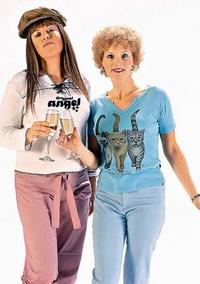
Current thoughts: wondering if fab 'Kath and Kim' pic that L and I put on the front cover of the Year 11 English Handbook will survive the editing process. Yes, it's relevant. But clipart usually the status quo.
I was part of a panel discussion at the VIT (Victorian Institute of Teaching) today. The topic was 'Critical Literacy: Pedagogy or Ideology. The other presenters were Assoc. Prof. Catherine Beavis (wow!), Assoc. Prof. Ray Misson (cool!), and Dr. Kevin Donnelly. It was a surreal experience sitting up the front with that crowd, to say the least.
Below is roughly what I had to say about the matter. I have tried to embed my powerpoint slides in this post, which were mostly visuals that were part of the narrative that I was trying to convey.
An Early Career Teacher’s Gaze: A (failed) Guide to Indoctrination
When I am beginning to explore a new text with students, I ask them to share their initial responses- the lines that jump off the page at them, their favourite characters, the moments that surprise them, the questions that remain with them. But then, I often ask them to put on a pair of sunnies. Not literally, but metaphorically. I ask my students to ‘see’ the text through someone else’s eyes- other than their own.
This is because I want them to read consciously, rather than unconsciously. I want them to think about the way that they derive meaning from a text, and whether this process is the same for everyone, every time. I want them to read critically.
And so, for a short time, I would like to ask you to look through the eyes of an early career English teacher. (slide 2) So, put on your sunglasses! What colour are the frames? What shade are the lenses? Are they cool and funky or a fashion faux pas? Perhaps these sunglasses are familiar to you and slip on comfortably, or perhaps they’re like the pair that I unearthed from my glove box last week, clumped together with sticky mintie wrappers.
After donning this pair of metaphorical sunnies, I would like you to imagine how this ‘debate’ over critical literacy that is currently taking place in the media, political spheres and here, might engage an early career English teacher, for whom critical literacy is an important part of their pedagogy.
You may have been as surprised as I was myself when I realised that my pedagogy placed me firmly within the ‘loony fringe’- a term used by the editors of The Australian for those who do not share their view that anything other than the ‘universal’ Western canon should be taught in English classrooms. You may also be able to appreciate the somewhat disconcerting experience of learning that the ideas I was engaging students with were “serious ideology” (as opposed to frivolous ideology, I can only assume). You might have experienced the dismay that I did when I read that by encouraging my students to engage thoughtfully and critically with texts, I was apparently denying them the opportunity to experience the “simple joys of reading".
What’s a young English teacher to do? Should I blindly accept the observations of various conservative commentators and dismiss the value of my own education, pedagogy and aspirations for my students?
My year 10’s finished formal classes for the year a couple of weeks ago. I would like to share with you the voices of these students, through extracts from their contributions to our class discussion board. We use this space to continue the conversations that begin in the classroom, and I would like to use my student voices to extend the discussion that we are having today. Sometimes my students begin the conversations on the discussion board, and sometimes I do, but our final discussion topic for the year required us to think carefully about what we had learned through our exploration of various texts.
(slide 3)
‘Jane’, the philosopher, writes:
Nothing in life is black and white and nothing in literature or art either really. If we had learnt it just one way we wouldn’t have learnt as much and couldn’t teach our teachers.
One attack that has been levelled at critical literacy in recent times has been that it is responsible for ‘dumbing down’ our English curriculum.
Around the time that catch-phrases like these were being printed in newspapers, my students and colleagues and I were busily exploring Steinbeck’s novella Of Mice and Men. We had wide ranging discussions about friendship, loyalty, dreams and disappointments. My students laughed at the antics of Lennie as he sneakily hid his pet mouse from the grumpy George, responded in shock and sorrow at the terrible choice that George made and empathised with poor Candy for the loss of his beloved companion.
But we also delved deeper as we interacted with this text. We examined the power structures at play in the novella. How you can complete a thoughtful study of this text without examining notions of class, gender and ethnicity is beyond me, I’m afraid. (Slide 4) I used The Simpsons to get students to think critically about class distinctions and their impact on society and to develop a reading of the novella with these ideas in mind. We also looked at movie posters, like this one (slide 5), and debated whether this interpretation of Steinbeck’s work was consistent with or different from their own. We discussed the implications of images like these, the values that lie behind them, and how our 21st century eyes respond to the portrayal of Curley’s Wife.
As part of this exploration, students produced creative responses to Steinbeck’s work that brought to light riches in the text that they unearthed after much investigation and questioning. Some students gave Curley’s Wife a name, and delved into more of her history. Another re-visioned the red-feathered mules from a symbol of danger and desire into Curley’s Wife’s personal link to her lost dreams. Yet another brought to life a story from Crooks’ childhood, illuminating possible reasons for his bitterness.
As an early career teacher, I’m still developing my pedagogy. I’m constantly reflecting on my professional practice with colleagues, about what I’m doing well, what I need to improve, what I want for my students, what I think education is for and the role of English and literature in all of this. When I was exploring Tennessee Williams’ A Streetcar Named Desire with my Year 11 Literature students earlier this year, I asked them to think about the text as being like a kaleidoscope (slide 6): what we see depends partly on who we are, where we are, and how we turn the wheel. I like to use the same metaphor when I think about my learning process as a teacher: my vision shifts as I learn and grow. But it is clear to me that the impact of critical literacy on my pedagogy opens up opportunities for my students, rather than diminishing them. (slide 7)
‘Simon’, the lover of exclamation marks, has this to say:
Now I know that if I don’t look deeper and ask more questions, there is so much that I am missing out on! So many different views, that the writer was trying to show, that other people picked up, and that I might find for myself.
I can learn so much more this way, it has been fun!
It is interesting to compare Simon’s excitement with the argument that the use of critical theory in the classroom steals the joy of exploring literature from students, replacing with theories “that they find abstract, dry and empty of meaning".
I haven’t found this to be my experience.
And I’m sure it’s fairly obvious to us that good teachers use a range of strategies and approaches to foster a love of reading in their students. Teachers provide opportunities for students to respond both critically and creatively to texts, sometimes simultaneously.
(slide 8)
‘Cam’, the film buff, writes:
It’s made me look deeper into things- especially movies. Analysing art has helped as well. But maybe sometimes we shouldn’t criticise and grade everything all the time. The world we live in these days rates everything. A new movie comes out and we rate it out of five stars. Maybe we should just accept it for what it is and not put it on a scale to see how good or bad it is?
Cam’s contribution to the discussion board made me stop and think. The question mark at the end of his response leads me to believe that he is still thinking about this, too, and grappling with what it means to develop a response to a work of art, whatever the medium. I’m glad that he is thinking about this, and even more importantly, that he felt comfortable enough to think aloud about it.
For me, one of the premises that critical literacy builds on is that there is more than one way of seeing. There is no doubt that this can be a challenging notion, for students, for teachers and for others outside the profession.
An English classroom is filled with different ‘ways of seeing’. Students bring their own values, beliefs, experiences, reading practices and questions with them, and so do teachers. Surely, it is better for students to be aware of the factors that make up their worldview than remain blind to them.
The questions that Cam is asking of himself, his classmates, and me, his teacher, reminds me of the questions that we, as teachers, ask ourselves and each other all the time. When I look around at the extraordinary wealth and diversity of experiences, practices, philosophies and contexts that are collected in this room, it makes me incredibly nervous for a start, but it also brings to mind the very reason why we must continue to seek out opportunities like this to share, critique, question and affirm what we do.
Our ways of seeing, understanding, and articulating, our teaching and learning are complex, intricate, colourful and multi-layered. They can’t be conveyed in a sound-bite, or a clever catch-phrase. Perhaps this could be considered problematic, when people seem so eager to speak for us, or position us, rather than allow us to speak for ourselves. But this isn’t a good enough reason to stop asking questions and exploring possibilities. If anything, critical literacy teaches us the dangers of assuming that there is such a thing as one ‘accepted’ position.
(slide 9)
‘Sophie’, the advocate, writes: By learning how to look at a situation from alternative views, it can also help us in society. When someone is being treated poorly, we can look at the world through their perspective. We can learn to stand in someone else’s shoes.
To be confidently literate in this world is not just about reading for comprehension or being able to follow established rules for spelling and grammar, even though these skills are important.
I want my students to be able to stand on their own two feet in this complex and intricate world, but I also want them to be able to slip on someone else’s shoes occasionally, or see through someone else’s sunnies. I will continue to look for ways to achieve this, and I will continue to pursue this in my own professional learning.
On Friday my students and I reached the next 'pit-stop' in the journey we have undertaken this semester- creating new forms of multimodal texts (new to us, anyway). This time, it was multimodal poetry with my year 10's. We finished off the year with a unit on 'poetry'- one of the few spots on the workplan that classes were free to follow any direction we chose (basically because it was the first time that poetry had taken a prominent spot in our year 10 course). Just about every class went in a different direction, but I decided that I wanted to get my students to question some of the assumptions that my students were making about what poetry actually is and who poetry speaks to and for. To do this, I introduced them to a whole range of multimedia poetry that was created, in one or another, using computer technology.
They fell in love with these concrete poems by Dan Waber, particularly 'Arms', 'poidog' and 'HaHa'. My favourite was the strange and absorbing 'The Last Day of Betty Nkomo' by Young Hae-Chang. And 'Oh' was lots of fun to investigate, because it is interactive. I projected the poem on the electronic whiteboard, and a couple of students came up to see if they could figure out how to 'read' it.
Anyway, this had followed on from some discussions about various music videos and what the images added to the lyrics. After we had explored quite a diverse range of multimedia poetry by various poets, for assessment, students had to choose a poem (from a collection of poetry books) and create a multimedia interpretation of it. They could use MovieMaker or PowerPoint for this, and all except one group elected to use MovieMaker. On Friday, we had a 'screening' of sorts, where they introduced and explained how they had interpreted their poem and what they wanted to convey through the images, movie clips, voice overs, music, effects and animation that they had used.
I really wasn't sure what to expect, even though I had been working with them on their projects for about a week. The 'process' leading up to this 'screening' had been really enjoyable in lots of ways. Doing this for the first time- with students who had never done anything like this in an English classroom- it had felt really.... 'creative' and 'generative' and 'spontaneous' and 'freeing' and 'unruly' and... it became difficult to pin down exactly what was going on in my classroom during these past two weeks! I do know that the 'outcomes' that I had in mind when I devised the task had shifted in some ways by the time the students presented, although I couldn't tell you exactly when my expectations had shifted. And, as I watched the final versions of their multimedia poems, I realised that some of the most interesting 'learning' that had occurred in terms of what the students had produced was quite different to what I had intended- some of the more interesting things that were happening in their 'short films' had more to do with narrative than poetry per se. And I'm finding that fascinating to think about, although I haven't really come to any conclusions about it all yet. I'm not sure if it was to do with software used- Windows MovieMaker- or not. Unfortunately, I'm unable to explain all of this to you without you actually seeing the multimedia poems and filling you in about the different 'journeys' that a number of my students in particular went on. Anyway, suffice to say that that was a great start to the day, and I'm looking forward to seeing the rest of them on Friday.
I have been meaning to blog about this for ages but simply haven't gotten around to it. I think that I can call the lecture I gave (on the hypertexts that my year 11's created) a success due to the positive feedback I received, although looking back on it there's plenty I would change 'next time'. I had, as is typical of me, come prepared with far too much material that I wanted to talk about, and didn't have enough time to do most of it justice. I thought that the narrative I was trying to tell was worth sharing, though. And I want to keep experimenting with my presenting style. Small steps... It was interesting to chat with some of the pre-service teachers afterwards who asked a range of questions, and not just about the content of my presentation. I was a little thrown by the number of questions that I got asked about technology- how I had learnt to do that... whether schools expected you to know how to do that.... what should I do to prepare for using technology with students next year... It surprised me because when I was planning the lecture (and the task with my students) I wasn't really thinking about the 'technology aspect' at all. I was preoccupied with notions of 'writing' and challenging some students' (and teachers') somewhat entrenched notions of what 'writing in classrooms' is. Trying out some things with hypertext was just the way that I chose to do this- on this particular occasion. After doing my best to reassure these pre-service teachers that their careers would not be in jeopardy if they didn't know how to insert a hyperlink, I wondered what I would have changed about my presentation to address their concerns. What additional 'background' should I have provided? Should I have begun with a brief lesson on 'how to' insert hyperlinks? A 'practical' lecture on elements of hypertext design? An explanation of what they can expect when they get out into schools and are required to use technology in the classroom? Well, I have come to the conclusion that all of these options would have been fairly useless, if not a complete waste of time. A lecture on 'how to create a hypertext' would probably be about as useful (useless) as a lecture on 'how to blog' and who knows what these pre-service teachers will come across when they leave Monash and arrive at their remarkably different school environments and contexts? I wanted to give an insight into how I reflect on my teaching practices, and I think I did that. This was the most valuable skill that I took away from my dip Ed, anyway. I find myself continuing to muse over the differences in a lecture that I gave to English method students at the beginning of 2005, and the one I gave recently. It's interesting to see how my perspectives on what I'm doing in my classroom (and profession) have shifted in some ways and developed in others (at least, I think they have). It feels good to be able to come to this conclusion.